Last updated October 15, 2026





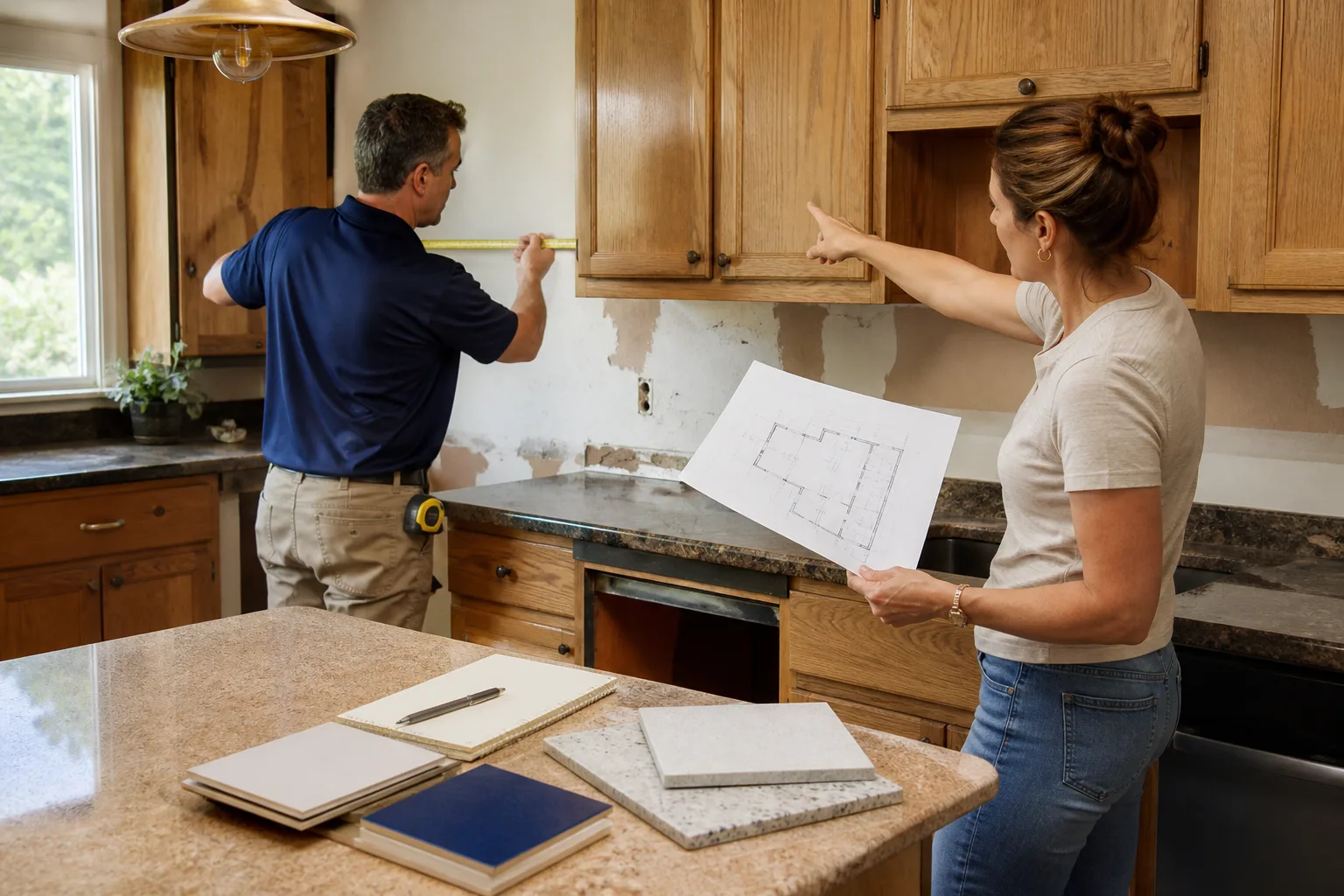
Free written scope consultation - allowances, timeline, and change-order rules on paper before a single trade is scheduled
General Contractor Maintenance Checklist for West Covina Homeowners
Here’s a number that should make every West Covina homeowner pause: most national home maintenance checklists are written for climates with four distinct seasons, regular rainfall, and winter freezes. West Covina has none of those. What it has instead is a dry, hot Mediterranean climate, October-through-December Santa Ana wind events that can gust past 60 mph, and a location roughly five miles from the Puente Hills fault system. Following a generic checklist from a national site means you’re likely skipping the three inspections that matter most here: roof-edge flashing after Santa Ana season, drywall crack monitoring along the Puente Hills fault corridor, and stucco resealing before winter rains hit hairline cracks. Isaac Pruett, who has run Mason Remodeling Co West Covina home since 2004, has walked thousands of San Gabriel Valley properties. The failures are predictable. This guide is built around what actually breaks in West Covina homes, when it breaks, and what a homeowner should do about it before a $400 fix becomes a $14,000 repair.
Quick Answer
A West Covina home maintenance checklist should be organized around four local failure patterns: Santa Ana wind damage to roofs, fascia, and flashing (October through December), stucco cracking and water intrusion (checked each September before wet season), seismic movement in drywall and foundations (monitored year-round, especially after nearby seismic events), and heat-island driven HVAC and attic ventilation strain (serviced each April before summer peaks above 100°F). Homeowners should budget roughly $600 – $1,200 annually for preventive maintenance and call a licensed general contractor when any single issue affects more than one trade or exceeds a $2,000 repair threshold.
Styles & brands we work with


Table of Contents
- Santa Ana Wind Damage: The October – December Protocol
- Stucco Crack Assessment: Why West Covina Stucco Fails Faster
- Seismic Movement Monitoring: Cosmetic vs. Structural Cracks
- HVAC and Attic Ventilation: Timing for West Covina’s Heat Island
- Plumbing and Irrigation: The Dry-Climate Checklist
- Exterior Wood, Paint, and Hardscape: Sun Damage Patterns
- When to Call a Licensed GC vs. a Specialty Trade
- What Preventive Maintenance Costs in West Covina
Santa Ana Wind Damage: The October – December Protocol
Santa Ana winds are not a one-day event. They arrive in October and can repeat every few weeks through December, with the strongest gusts historically hitting the foothill corridors that run through West Covina’s northern and eastern edges. For homes with tile roofs, which are common in neighborhoods built from the 1960s through the 1990s, the failure point is almost never the tile itself. It’s the edge flashing, ridge caps, and the mortar under hip and ridge tiles. Wind-driven grit and debris work under edges, loosen mortar, and create a situation where one more strong gust can lift a tile and send it into a neighbor’s car or window.
For flat roofs, which appear on many mid-century ranch homes and additions throughout West Covina, the risk is different. Flat roofs rely on membrane continuity, and Santa Ana winds carry fine dust and debris that scours seams and parapet edges. A pinprick in a flat roof membrane won’t show inside for months, and by the time it does, the roof sheathing underneath may already be compromised.
Here is the protocol we recommend to West Covina homeowners every October:
- Visual check after the first major wind event, not before. Walk the perimeter of your home and look at the ground first: fallen tile fragments, mortar crumbs, or pieces of flashing on the ground tell you where to look up. If you find roof material on the ground, the roof needs a professional inspection before the next wind event.
- Inspect ridge caps and hip lines from the ground with binoculars. Look for shifted tiles, exposed nails, or missing mortar. Tile roofs in West Covina regularly lose mortar at ridge lines after 20+ years of thermal cycling, and the Santa Anas accelerate that loss.
- Check fascia boards and eaves for lifted or separated flashing. Wind gets under the drip edge and works aluminum loose. Once loose, water follows in January and February, when West Covina gets most of its roughly 17 inches of annual rain.
- Clear all roof edges and gutters of wind-deposited debris. Palm fronds, eucalyptus bark, and neighbor’s roof tiles are common finds in West Covina gutters after a Santa Ana event. Clogged gutters force water back under eaves and behind stucco.
- Document anything questionable with phone photos. If you call a contractor, you’ll be able to show exactly what you saw rather than trying to describe it.
One important note: do not climb onto a tile roof to inspect it yourself. Tile is brittle, especially on 40-year-old roofs, and walking on it wrong cracks tiles and creates the very leak you were trying to prevent. From the ground or from a ladder against the fascia is sufficient for a homeowner-level inspection. If you spot something worth a closer look, call a licensed general contractor. We regularly coordinate roof inspections for West Covina homeowners and work with specification-grade material partners like GAF and Owens Corning when repairs are needed.
Stucco Crack Assessment: Why West Covina Stucco Fails Faster
Stucco is the dominant exterior finish on West Covina homes, especially those built between 1950 and 2000. It performs well in dry climates until it doesn’t, and the warning sign is almost always a crack that has been ignored for too long. What makes West Covina stucco failures move faster than homeowners expect is the combination of intense UV exposure, thermal expansion, and the fact that cracks that form during dry months get flooded during wet months.
Here’s the pattern we see consistently: a hairline crack forms in August or September as the stucco expands in 100°F heat. The homeowner doesn’t notice or doesn’t think it matters. Then January brings rain, water enters the crack, and the moisture gets trapped behind the stucco layer. In West Covina’s warm climate, trapped moisture doesn’t just sit there, it accelerates stucco delamination and can rot the underlying paper and sheathing within one or two wet seasons. A crack that would have cost $400 to patch and seal in September can become a $6,000 stucco repair by March.
The September stucco protocol for West Covina homeowners:
- Walk the full perimeter of the home. Get close enough to see hairline cracks, not just obvious ones. Pay attention to corners, window and door openings, and areas where stucco meets a different material like wood trim or brick.
- Measure and photograph every crack you find. A crack under 1/16 inch wide and stable year-over-year is usually cosmetic. A crack wider than 1/8 inch, or one that grows between inspections, needs evaluation.
- Check for staining, bubbling, or soft spots near cracks. These indicate water has already entered. Soft stucco in West Covina is almost always a moisture problem, not a structural one, but it needs to be opened up and assessed.
- Inspect the weep screed at the base of stucco walls. This is the metal flashing at the bottom that allows moisture to escape. If it’s buried in soil, covered by a patio slab, or clogged with paint, trapped moisture can’t drain, and the stucco will fail from the inside out.
- Seal or schedule sealing for any crack wider than a hairline before the wet season. In West Covina, the wet season is concentrated between December and March. September is the right month to handle this. October works. November is cutting it close.
Stucco repair and resealing is one of those jobs that can sit at the line between handyman work and general contractor work. Patching a small crack with elastomeric sealant is a homeowner-level task if the crack is stable and dry. But if the crack is wider than 1/8 inch, if there’s staining, or if the stucco has already begun to delaminate, it’s time to bring in a licensed GC who can open the wall, assess what’s behind the stucco, and repair the full system, not just the surface. As part of broader Home Remodeling in West Covina work, we’ve pulled back stucco on dozens of homes and found significant rot behind what looked like minor surface cracks.
Seismic Movement Monitoring: Cosmetic vs. Structural Cracks
West Covina sits in the San Gabriel Valley, roughly five miles from the Puente Hills thrust fault system, which runs from the Puente Hills through downtown Los Angeles and into Orange County. The USGS has identified this fault as capable of producing a magnitude 7.5 earthquake. Smaller seismic events along this and nearby fault systems are common enough that most long-time West Covina residents have felt at least a few. What gets less attention is the constant micro-movement that affects homes over decades: drywall cracks, door frames that go out of square, tile grout that cracks along specific lines, and concrete slabs that shift a quarter inch every few years.
The key skill for a West Covina homeowner is learning to read interior cracks and distinguish cosmetic from structural. Here’s the framework we use when evaluating homes:
- Cosmetic cracks: Hairline cracks in drywall that run vertically or diagonally from the corners of doors and windows, are less than 1/16 inch wide, and do not change over multiple seasons. These are caused by normal settling and thermal expansion. They can be taped, mudded, and painted, and they typically do not return if the underlying movement has stabilized.
- Watch-list cracks: Cracks wider than 1/16 inch that run through drywall and into the corner bead, cracks that reopen within a year of being repaired, or cracks that appear in the same location on multiple floors of the home. These indicate ongoing movement. They are not necessarily dangerous, but they need monitoring.
- Structural red flags: Diagonal cracks that run from the corner of a window or door toward the ceiling at a 45-degree angle, cracks that are wider at the top than the bottom, any crack wider than 1/4 inch, or cracks that align with visible foundation cracks outside. These can indicate shear wall or foundation issues and warrant an immediate evaluation by a licensed general contractor or structural engineer.
- Foundation signs from outside: Stair-step cracks in brick or block foundation walls, a foundation crack that aligns with an interior wall crack, or a slab that has visibly shifted at an expansion joint. In West Covina, many homes built before 1970 have raised foundations, and the crawl space is the best place to look for evidence of movement.
- Establish a baseline. Once a year, walk your home and photograph any crack you find. Store the photos in a dated folder.
- After any felt earthquake above magnitude 3.5, do a full interior walkthrough within 48 hours. Compare new cracks against your baseline photos.
- Mark the ends of any watch-list crack with a pencil line and the date. If the crack grows past the line within six months, it’s time for a professional evaluation.
- Check doors and windows annually. If a door that closed cleanly now sticks, or a window that opened easily now binds, the frame has moved. One door sticking is ordinary settling. Three doors sticking in different rooms is a pattern.
- If you see red-flag cracks, stop monitoring and get an evaluation. Structural issues in West Covina homes are almost always less expensive to address when caught early than after they’ve affected plumbing, tile, and foundation stability.
- Schedule an HVAC service call in early April, before temperatures hit 90°F. By the time the first 100°F day arrives, every HVAC company in the San Gabriel Valley is booked out two to three weeks. The homeowners who schedule in April get service within days. The ones who wait until July wait in a hot house.
- Have the technician measure static pressure and refrigerant charge, not just change the filter. In West Covina’s long cooling season, a system that’s 20% low on refrigerant works harder all summer and burns out compressors prematurely. Static pressure problems mean duct leaks or undersized returns, both common in 1970s-era West Covina homes.
- Inspect attic insulation and ventilation during the same visit. Attic temperatures in West Covina routinely exceed 140°F in summer. Without adequate insulation and ventilation, that heat radiates into the living space and forces the AC to run constantly. Many West Covina homes built before 1980 have R-19 insulation at best, where R-38 is the current recommendation for this climate zone.
- Check for rodent activity in the attic and ductwork. Rats and squirrels are active in West Covina’s older neighborhoods, and they love chewing through flex duct. A duct with a hole in it is cooling the attic, not the house.
- Clean the condenser coils and clear vegetation around the outdoor unit. West Covina yards produce dust and debris that clog coils fast. A clogged coil in 105°F heat is one of the most common causes of AC failure we hear about from clients.
- Check water pressure annually. West Covina water pressure varies by neighborhood and elevation, and pressure above 80 psi stresses pipes, fittings, and appliance supply lines. A pressure regulator that has failed open is a common cause of pinhole leaks in copper pipe and premature water heater failures. A pressure gauge costs about $15 at any hardware store.
- Inspect all visible supply lines and angle stops under sinks and toilets. In our experience, the failure point is usually the cheap plastic or chrome-plated brass supply line that was installed decades ago. If you see corrosion, mineral crust, or any sign of moisture, replace it. It’s a $20 part and a 15-minute job.
- Flush the water heater annually. West Covina’s hard water deposits sediment in the tank, which reduces efficiency and shortens tank life. If your water heater is over 10 years old and has never been flushed, the sediment may have calcified to the point where flushing causes more problems than it solves. In that case, plan for replacement before it fails, not after.
- Check irrigation systems in February, before the growing season. A cracked valve or sprinkler head that leaks through the summer wastes hundreds of gallons of water and can undermine concrete walkways, patios, and foundation edges. West Covina water rates make this a real cost issue, not just a conservation concern.
- Inspect the main shutoff valve twice a year. In an emergency, you need to know the valve turns and where it is. Gate valves on older West Covina homes corrode open or closed. If yours won’t turn or won’t fully close, replace it with a ball valve before an emergency happens.
- Inspect exterior caulk and sealant every September. Caulk fails from UV exposure, and once it shrinks or cracks, water gets behind trim, around windows, and into stucco. A tube of quality exterior caulk costs under $10. The water damage it prevents costs thousands.
- Check wood trim, fascia, and eaves on south and west exposures twice a year. In our experience, west-facing fascia on West Covina homes needs repainting every 3 to 5 years, not the 7 to 10 years you’d expect in milder climates. If you can see bare wood or peeling paint, schedule it before the winter rains.
- Inspect patio covers, decks, and pergolas for sun-related deterioration. Wood dries and splits in West Covina’s low humidity, and termites love dry, cracked wood. Check for split boards, loose connections, and any sign of termite activity: mud tubes, frass, or hollow-sounding wood.
- Evaluate hardscape for movement and drainage issues before wet season. Concrete patios, walkways, and retaining walls shift over time due to soil movement and seismic activity. Look for new cracks, separated joints, or areas where water pools after rain. Pooling water against the foundation is a problem in any climate, and in West Covina’s clay-heavy soils, it contributes to foundation movement.
- Check window and door seals for gaps. Gaps let dust in during Santa Ana wind events and conditioned air out during summer. West Covina’s wind-blown dust is a particular nuisance, and a 1/16-inch gap around a door adds up to a significant air leak over time.
- The issue is isolated to one system and does not require opening walls, floors, or ceilings. A leaking faucet, a failed water heater, a clogged drain, or a dead AC compressor are specialty-trade jobs.
- The repair is routine and the trade can diagnose and fix it in one visit without touching other systems.
- The total cost is under $2,000 and the scope is clear.
- The issue spans multiple trades. A stucco crack behind a window that has caused water damage to framing and drywall requires a GC to sequence the repair correctly: open the wall, dry it, repair framing, replace stucco, repair drywall, paint.
- The repair requires permits. In West Covina, structural repairs, additions, and work that changes the building envelope typically require permits. A licensed GC handles permitting and inspections as part of the job.
- You don’t know what’s actually wrong. If you see a crack and you’re not sure whether it’s cosmetic or structural, a GC can assess the full picture and bring in the right specialty trades or an engineer as needed.
- The total cost will exceed $2,000 and you want written scope, written pricing, and a clear timeline before work starts.
- The project is a remodel or addition, not a repair. Bathroom Remodeling in West Covina and whole-home projects are GC territory, full stop.
- HVAC service call (annual): $120 – $250 for a full inspection, coil cleaning, and refrigerant check. Budget more if repairs are needed.
- Roof inspection after Santa Ana season: $150 – $400 depending on the roof type and access. Many roofing companies offer free inspections; a GC or roofer on site for another project may include a visual check at no charge.
- Stucco crack sealing and touch-up (small cracks, DIY or handyman): $50 – $200 in materials or $300 – $800 for a professional patch and seal on a few cracks.
- Caulking and sealant refresh (exterior): $200 – $600 depending on the number of windows, doors, and trim lines.
- Water heater flush (annual, DIY): Under $25 in supplies if your heater has never been flushed, or $150 – $300 for a professional flush and inspection.
- Irrigation system check and adjustments: $100 – $250 for a professional spring tune-up, or $30 – $80 in parts if you do it yourself.
- Interior crack monitoring and documentation: $0, but the baseline photographs you take this year are worth thousands if you need to file an insurance claim or address a structural issue later.
Here’s the monitoring protocol we recommend.
For homeowners who want a professional assessment, a General Contractor in West Covina can evaluate the full picture: whether the movement is ongoing, whether it’s affecting plumbing or framing, and what the repair sequence should be. We’ve coordinated with structural engineers on many West Covina remodels and additions, and we bring the engineer in early when cracks suggest anything beyond cosmetic settling.
HVAC and Attic Ventilation: Timing for West Covina’s Heat Island
National maintenance checklists will tell you to service your HVAC system in spring and fall. In West Covina, that’s only half right. The San Gabriel Valley runs 10 to 15 degrees hotter than coastal Los Angeles during summer, and West Covina’s inland location means the cooling season starts in May and can run into October. The heat island effect from miles of pavement and roofing adds another few degrees on top. Your air conditioner is not a seasonal appliance here. It’s a six-month workhorse, and it needs to be treated that way.
The April HVAC protocol for West Covina homeowners:
Attic ventilation deserves its own attention. Many West Covina homes have gable vents, and some have no mechanical ventilation at all. In this climate, a powered attic ventilator or properly sized passive vents can drop attic temperatures by 20 to 30 degrees, which reduces the heat load on the living space and can cut cooling costs meaningfully. But ventilation must be balanced with intake; a powered fan without adequate soffit intake will pull conditioned air out of the living space through ceiling penetrations. This is exactly the kind of system-level issue where a general contractor’s perspective helps. In our experience, attic ventilation and insulation are two of the most under-invested upgrades West Covina homeowners can make in terms of comfort per dollar.
Plumbing and Irrigation: The Dry-Climate Checklist
West Covina’s dry climate creates a plumbing paradox: water damage is still one of the most expensive problems a homeowner faces, but the failures often start differently than they do in wetter climates. In humid regions, homeowners worry about mold from ambient moisture. In West Covina, the concern is pipe and fitting failures from thermal cycling, mineral buildup from hard water, and the slow drip behind a wall that goes unnoticed for months because the air is so dry it evaporates before it stains the drywall.
The plumbing checklist that matters for West Covina homes:
One West Covina-specific issue worth flagging: many homes in the area have original galvanized steel supply lines from the 1950s and 1960s. Galvanized pipe corrodes from the inside, narrowing the interior diameter until water pressure drops noticeably. The first sign is usually low pressure in one or two fixtures that are farthest from the main line. If you’re experiencing low water pressure, a plumber can assess whether the issue is the municipal supply, a pressure regulator, or corroded galvanized lines. Repiping a whole house is a significant project, but it’s a common one in West Covina’s older neighborhoods, and it’s squarely Home Remodeling in West Covina territory.
Exterior Wood, Paint, and Hardscape: Sun Damage Patterns
The sun is West Covina’s most relentless contractor. UV exposure breaks down paint binders, dries out wood, fades finishes, and accelerates the failure of caulk and sealant at a rate that surprises homeowners who moved here from milder climates. The south and west exposures bear the worst of it, especially in West Covina’s hillier neighborhoods where homes get full afternoon sun with no shade relief.
Here’s the exterior checklist calibrated for West Covina’s sun patterns:
For hardscape projects, material choice matters in this climate. We work with specification-grade hardscape manufacturers like Belgard and Techo-Bloc because their products are engineered for UV stability and thermal expansion. Cheaper pavers and concrete products fade and crack noticeably faster in West Covina’s sun. If you’re planning a hardscape replacement or addition, it’s worth investing in materials designed for this climate rather than the least expensive option at the home center.
Modular construction brands like Boxabl and Dvele have been getting attention in Southern California for their factory-controlled building quality, and while they’re not maintenance solutions, the conversation is relevant: the same principles of UV resistance, moisture management, and thermal performance that make those companies interesting apply to how West Covina homeowners should think about exterior materials and finishes.
When to Call a Licensed GC vs. a Specialty Trade
One of the most common questions we hear from West Covina homeowners is whether to call a specialty trade or a general contractor for a particular problem. The answer usually comes down to scope and overlap. Here’s the framework we recommend:
Call a specialty trade directly when:
Call a licensed general contractor when:
One more distinction worth drawing: a handyman can be appropriate for small, isolated jobs, but handymen in California are limited to work under $500 in labor and materials per project. Anything larger requires a licensed contractor by law. We’ve seen too many West Covina homeowners discover this the hard way after an unlicensed worker started a job and walked away, leaving open walls and no recourse.
What Preventive Maintenance Costs in West Covina
Preventive maintenance in West Covina is not expensive compared to the repairs it prevents. Here’s a realistic annual budget, based on what we’ve seen across hundreds of San Gabriel Valley homes:
Total realistic annual budget: $700 – $1,600 for a well-maintained West Covina home. That’s the cost of staying ahead of this climate. The cost of falling behind is measured in different units: a $12,000 stucco repair, an $18,000 repipe, a $9,000 AC replacement in July when you can’t wait for a better price.
West Covina’s housing stock skews toward homes built between 1950 and 1985, which means most homes are entering their seventh or eighth decade of service. Homes that have been maintained on a consistent schedule hold up beautifully. Homes that get maintained only when something breaks tend to break in clusters: a roof leak reveals rotted sheathing, which reveals termite damage, which reveals an electrical issue. The maintenance checklist is how you keep cluster failures from happening.
Common Mistakes to Avoid
- Skipping the September stucco check because “there’s no rain yet.” In West Covina, this is the single most expensive maintenance mistake we see. Cracks that form during the dry season get flooded during the wet season, and the repair cost multiplies. September is the right month. October is acceptable. November is a gamble.
- Walking on a tile roof to inspect it. Tile roofs in West Covina are brittle after decades of UV and thermal cycling. Walking on them cracks tiles and creates leaks. Use binoculars from the ground or a ladder against the fascia.
- Ignoring hairline interior cracks because they’re “just settling.” Most are, but the ones that aren’t announce themselves gradually. If you don’t have baseline photos and dated marks, you have no way to distinguish a stable cosmetic crack from a developing structural issue.
- Waiting until summer to service the AC. By the time West Covina hits its first 95°F day, HVAC companies are booked out for weeks. Scheduling in April means you’re ahead of the rush and you’ll know about any issues before you need the system running hard.
- Using a handyman for work that requires a license. California law caps handyman projects at $500. We’ve seen homeowners hand thousands of dollars to unlicensed workers for jobs that went sideways, and there’s no recourse when that happens. Know the threshold.
- Painting over stucco cracks instead of sealing them properly. Paint fills the surface but doesn’t stop water intrusion. The crack reappears, and the water has been getting behind the stucco the whole time. Seal first, then paint.
See the difference
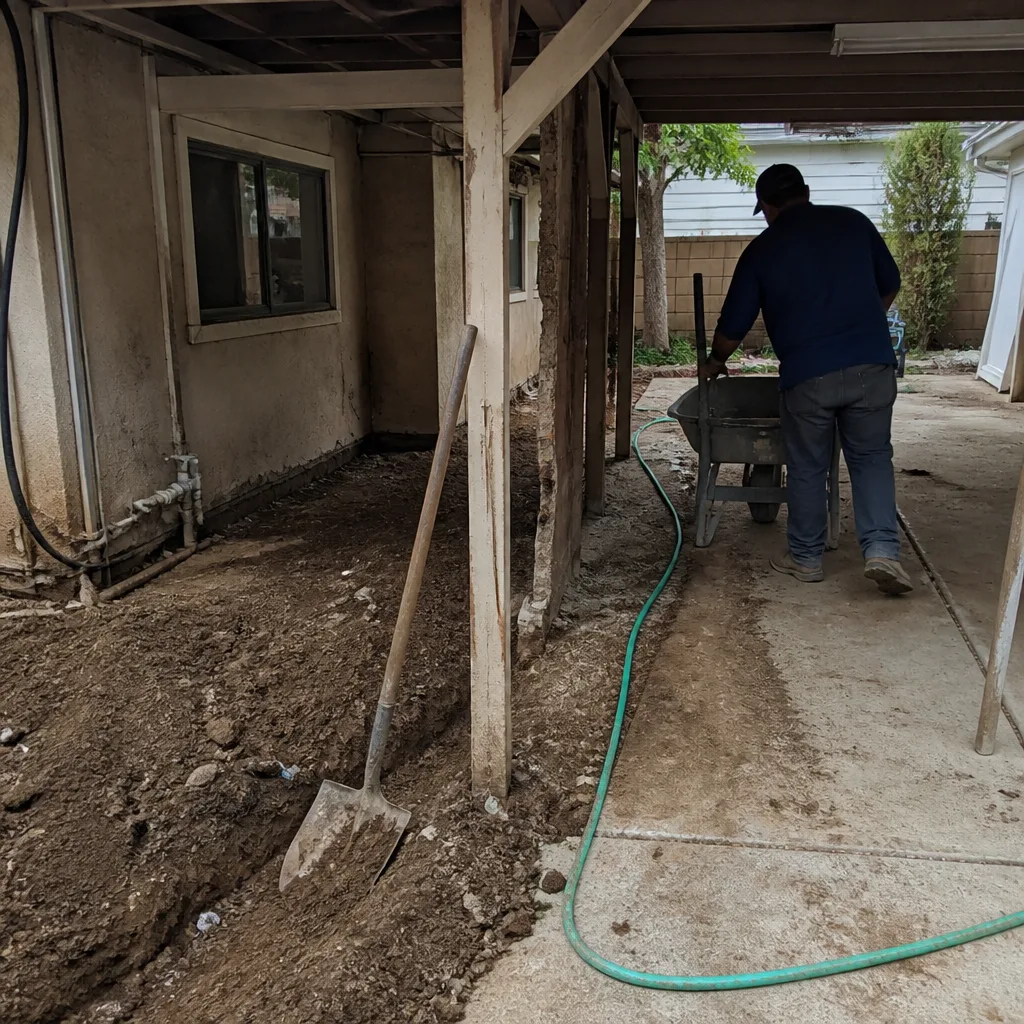 Before
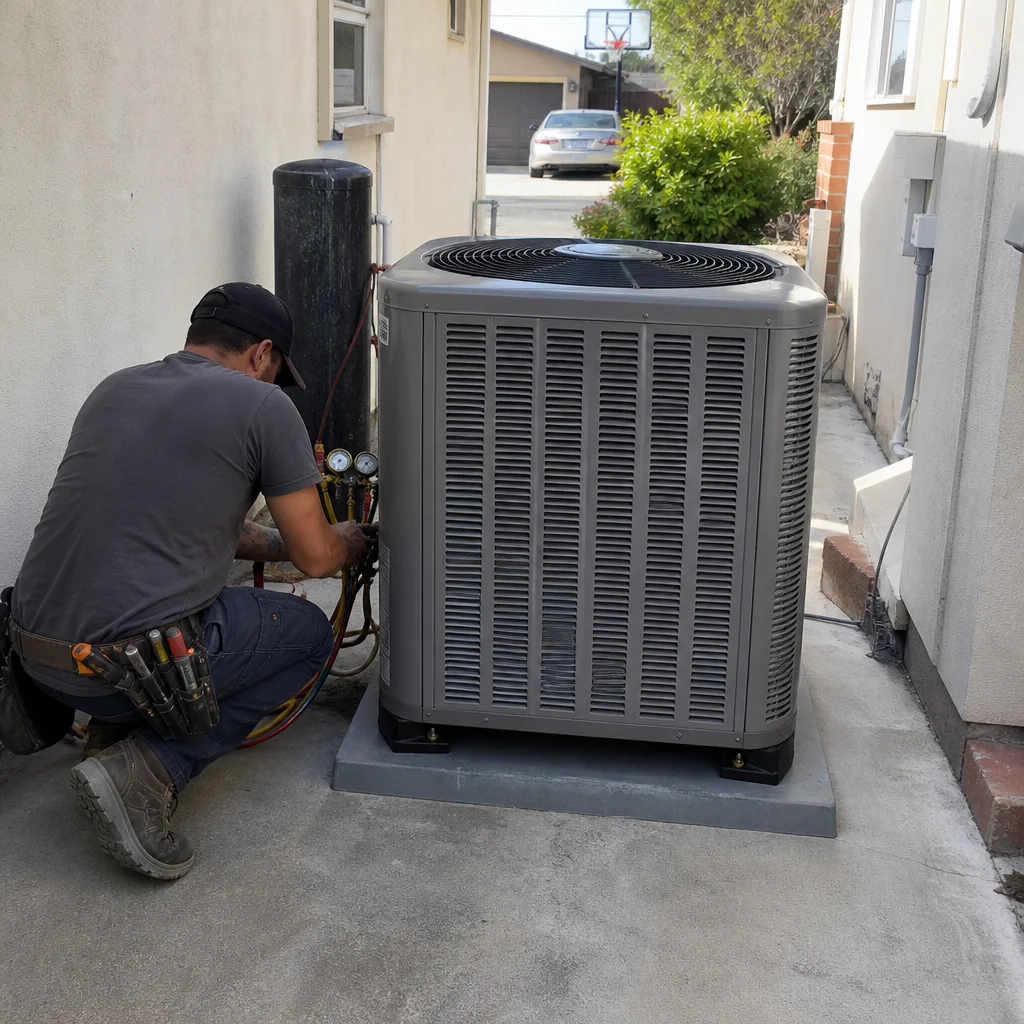 After
After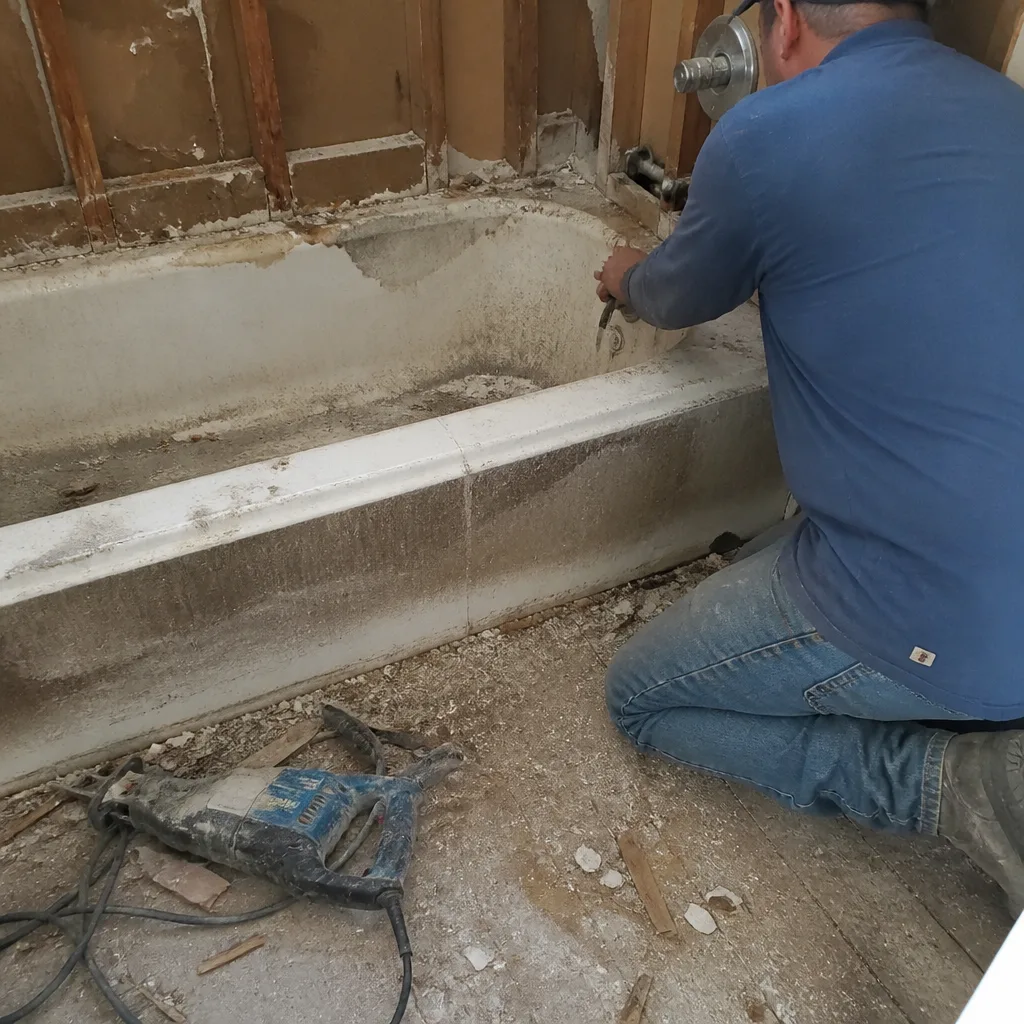 Before
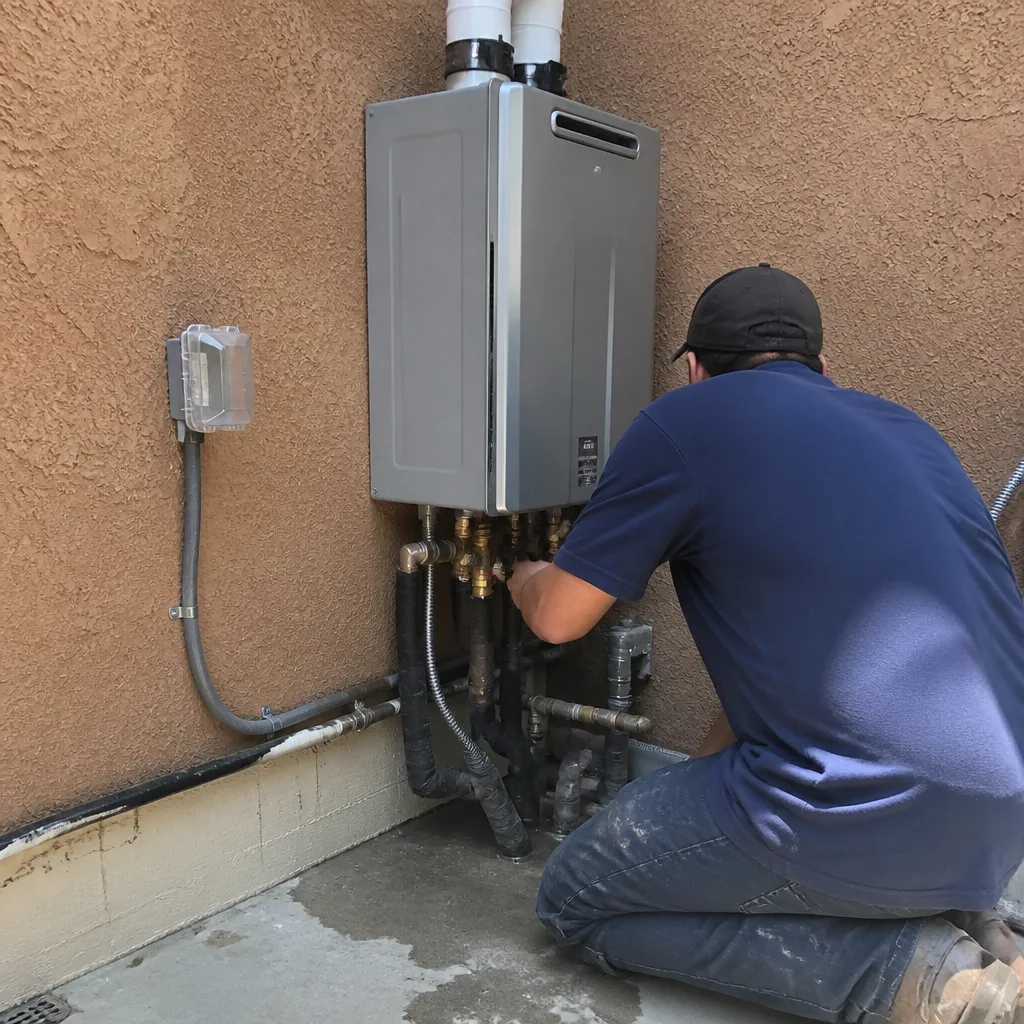 After
After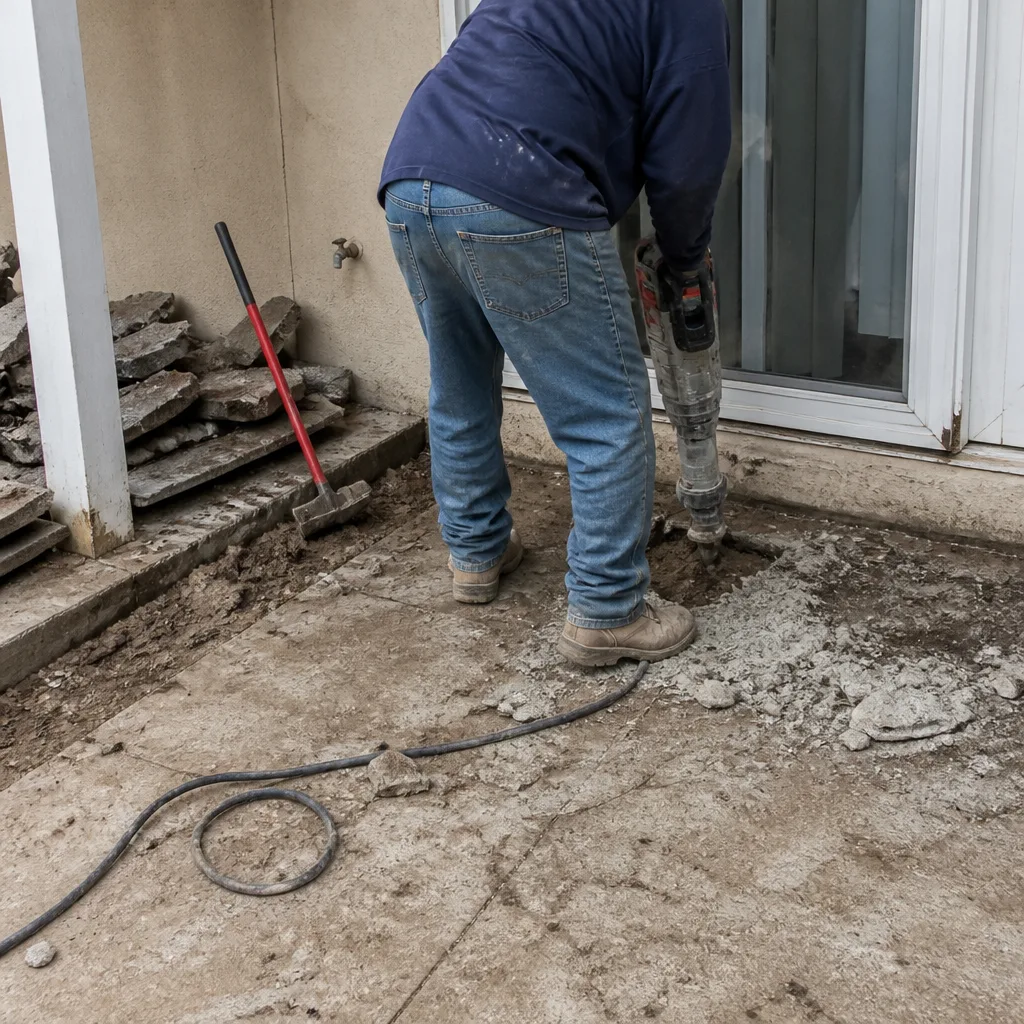 Before
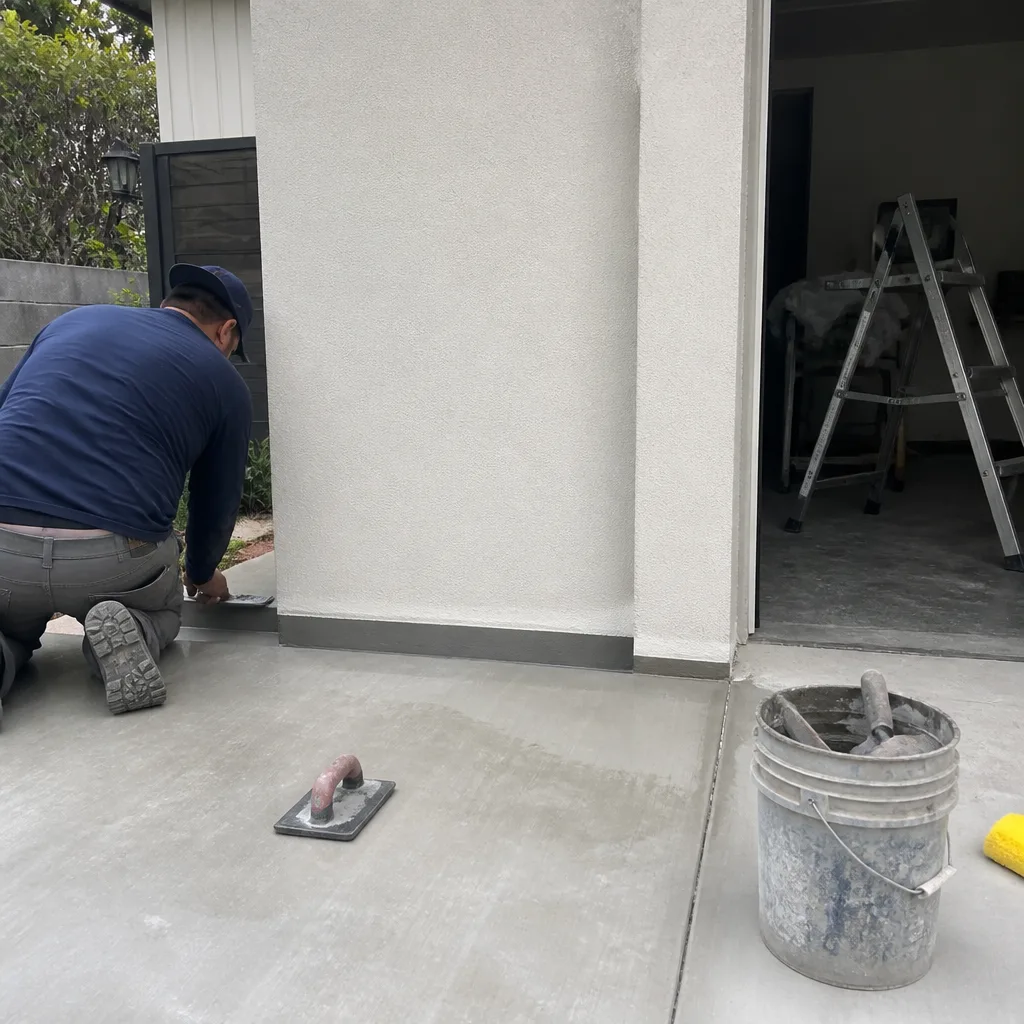 After
AfterWhen to Call a Professional
Call a professional when you see a red-flag structural crack, when water is entering the home from an unknown source, when a leak has been active long enough to cause staining or odor, when multiple systems are affected by one issue, or when any repair will require opening walls, floors, or ceilings. Call when you find significant roof damage after a wind event, when stucco is soft or bubbling, or when you’ve been meaning to handle something for two seasons and it hasn’t gotten better on its own. Mason Remodeling Co West Covina offers free estimates in West Covina. Call (707) 760-7579 to schedule one. A written price is delivered before any work begins, every time.
Frequently Asked Questions

Twice a year at minimum: once in September before the wet season and once in March after the wet season ends. The September inspection is the more important of the two, because it gives you time to seal cracks, clear gutters, and complete any repairs before the winter rains arrive and turn small issues into water-damage problems. If you’re only going to do one thorough exterior walkthrough per year, make it September. Call (707) 760-7579 if the walkthrough turns up anything you’d like a professional to assess.
A maintenance-focused visit from a general contractor typically includes a visual inspection of the roof, stucco, exterior caulking and sealant, interior cracks, attic ventilation, and drainage. The contractor documents findings with photos, identifies which items are priority repairs versus monitor-and-recheck items, and provides a written scope and price for any work the homeowner wants done. A good GC will also tell you which items a specialty trade can handle directly, so you’re not paying general contractor rates for a plumber’s job.
A visual maintenance inspection from a licensed general contractor typically costs $150 to $350, depending on the size of the home and the scope of the inspection. Some companies apply the inspection fee toward any repair work you proceed with, so it’s worth asking. Mason Remodeling Co West Covina offers free estimates, and when we come out to look at a specific issue, we’ll note anything related we see that needs attention, at no extra charge.
Serious cracks are those wider than 1/4 inch, diagonal cracks running from window or door corners at a 45-degree angle, cracks wider at the top than the bottom, cracks that align with visible foundation cracks outside, and any crack that grows noticeably between annual inspections. Hairline cracks under 1/16 inch that stay stable year over year are typically cosmetic thermal movement and not a structural concern. Call (707) 760-7579 for a free assessment if you’re not sure which category yours falls into.
Most routine maintenance and repair work does not require a permit: caulking, sealing, stucco patching, painting, HVAC servicing, water heater flushing, and similar items are exempt. Structural repairs, additions, changes to the building envelope, and any work that alters load-bearing elements do require permits. A licensed general contractor handles permitting as part of the job and coordinates the required inspections with the city of West Covina.
Call a general contractor when the project will exceed $500 in labor and materials, which is the legal limit for handyman work in California. Also call a GC when the job spans multiple trades, requires a permit, involves opening walls or floors, or when you need a written scope and price before work begins. For small, isolated repairs under $500, a handyman is the appropriate choice. For everything larger, you need a licensed contractor.
The Bottom Line
West Covina homes fail in predictable ways, and the maintenance checklist that prevents those failures is specific to this place: Santa Ana wind protocols each October, stucco sealing each September, seismic crack monitoring year-round, and HVAC service each April before the heat hits. See our more guides & resources for related maintenance topics. The budget for all of it is under $2,000 a year, which is a fraction of what any single neglected system costs to repair. At the center of the whole approach is a simple rule: inspect before the season that stresses each system, not after. If you find something that needs a professional eye, or if you’d rather hand the whole checklist to someone who knows what to look for, call Mason Remodeling Co West Covina at (707) 760-7579 for a free estimate. You’ll get a clear picture of what needs attention now, what can wait, and what it will cost before anything starts.
Written by Isaac Pruett, Owner at Mason Remodeling Co West Covina, serving West Covina since 2004.