Free written scope consultation - allowances, timeline, and change-order rules on paper before a single trade is scheduled
Plant Prefab Roofing: The West Covina Owner’s Guide
If you own a Plant Prefab home and the roof is showing wear, we stock and install Plant Prefab-compatible roofing components for homes across West Covina. Expect to pay between $400 and $1,800 for a targeted roof repair, or $8,000 to $20,000 for a full Plant Prefab roof replacement, depending on the panel condition and extent of damage. Most West Covina owners discover the problem the same way: a water stain on the ceiling after a Santa Ana wind event, or granules collecting in the rain gutter after a dry summer.
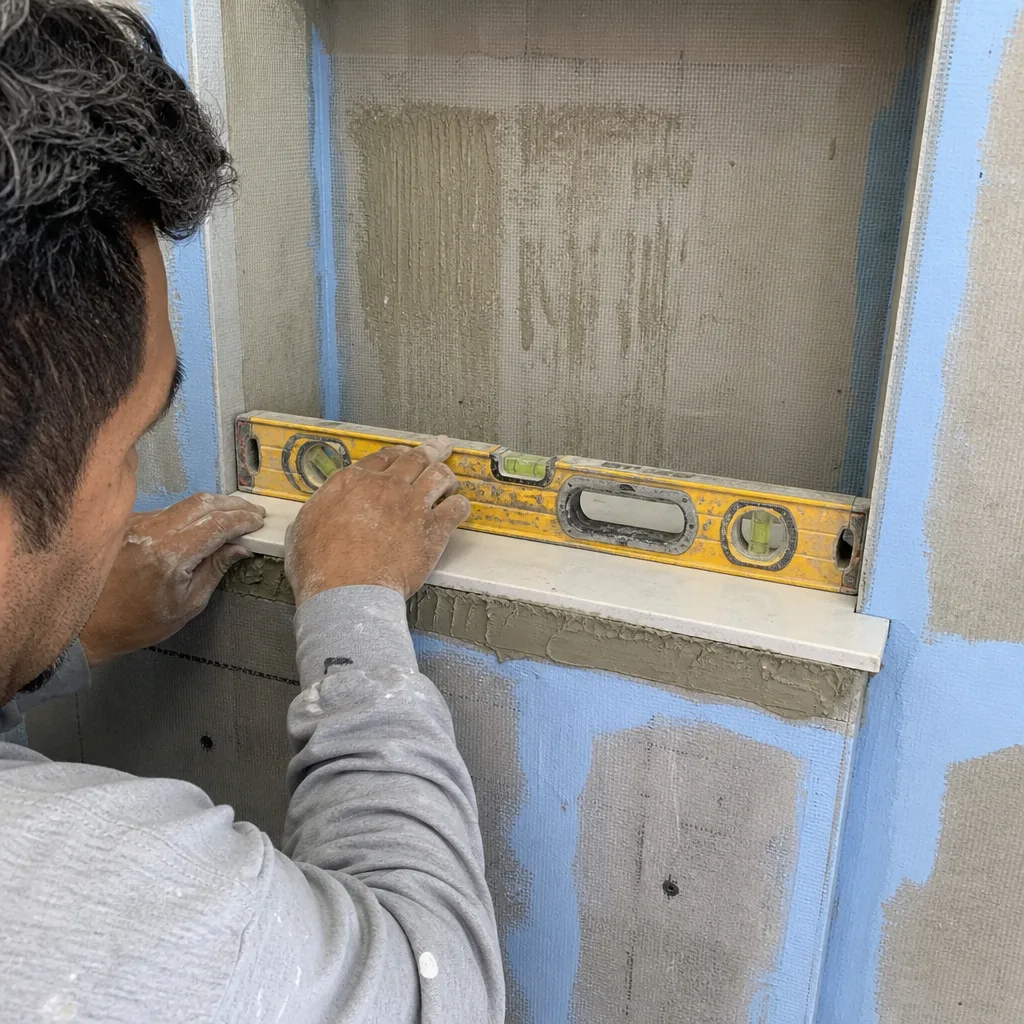
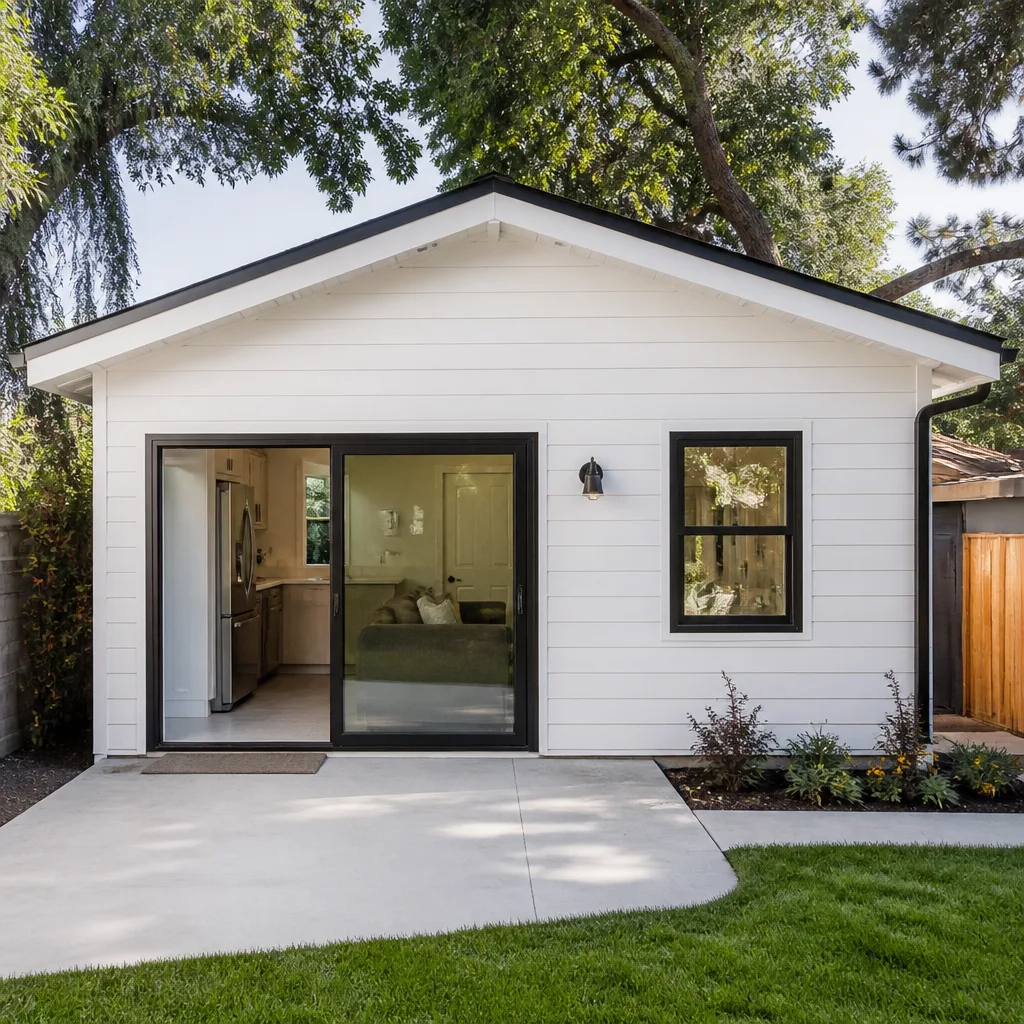
Plant Prefab homes use factory-built panelized construction, which means the roof assembly arrives on-site as a finished system rather than being stick-framed piece by piece. That’s good news for precision and bad news for owners who assume any roofer understands how to work on it. The roofing membrane and flashing details don’t always behave like conventional California roof assemblies, and getting the wrong part or the wrong installation method leads to repeat leaks. We’ve worked on Plant Prefab homes near Eastland Center and throughout the San Gabriel Valley, and the failure pattern is consistent: it’s rarely the panel itself, usually the joints where panels meet, the flashing around the penetration points, or edge terminations that weren’t sealed correctly for our particular sun and wind exposure. Isaac Pruett grew up in Los Angeles and learned the trade through the construction technology program at Los Angeles Trade-Technical College, and he’s spent enough years on West Covina roofs to know exactly how this climate wears on prefab systems.
Key takeaways:
- Plant Prefab roofs fail first at seams, flashings, and edge terminations, not the panels themselves.
- Targeted repairs run $400 to $1,800; full replacements run $8,000 to $20,000 in West Covina.
- We’re an independent service provider, not affiliated with Plant Prefab, but we know their systems well.
- You get a written price before work starts, and the work is covered by our 365-Day Done Right Promise.
Which Plant Prefab Models This Applies To
Plant Prefab has produced several model lines over the years, and the roofing approach varies between them. If your home is one of the earlier LivingHome models, you’re likely dealing with a factory-built roof cassette with an applied roofing membrane. Newer Plant Prefab homes, particularly those built under the sustainability-focused series, use a more conventional roof deck over the panelized structure. The important thing for a West Covina owner to know is this: the roof isn’t a generic assembly, and the replacement part isn’t always interchangeable across models.
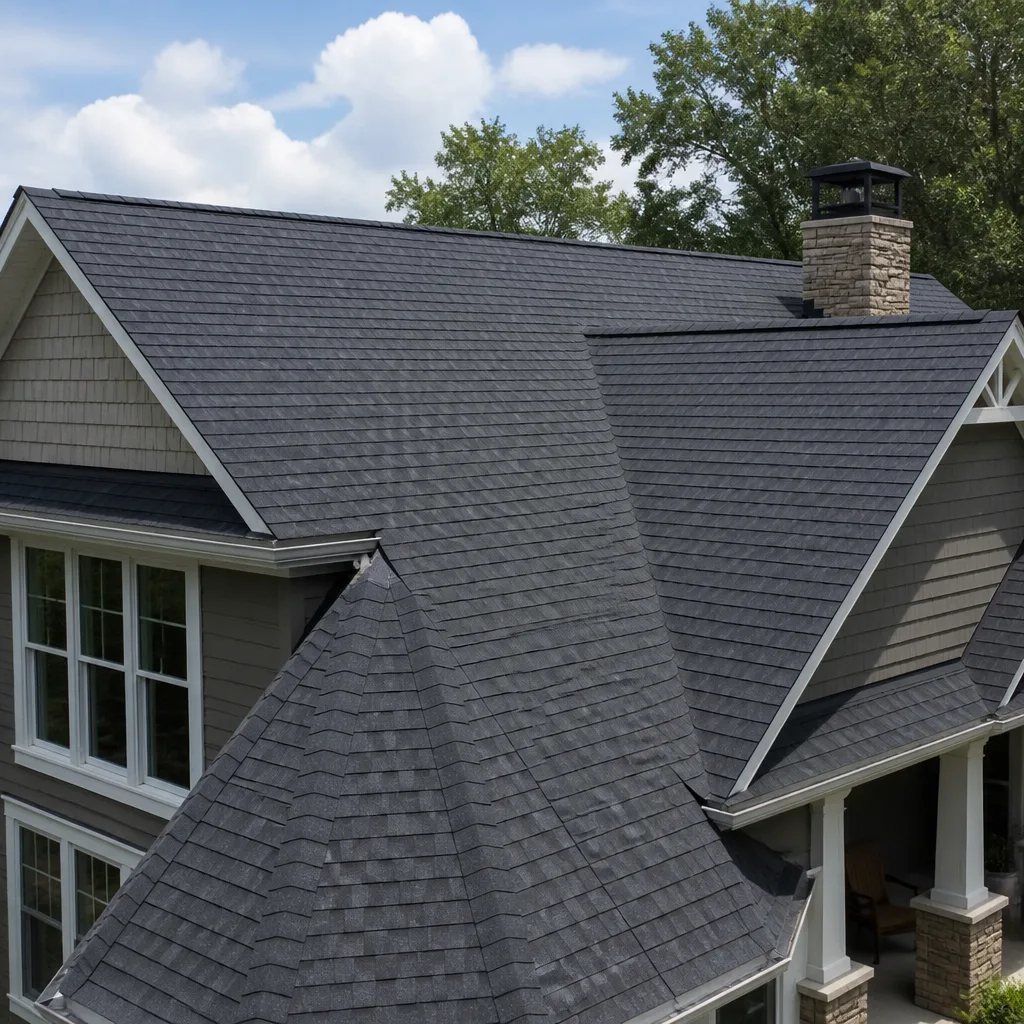
Here’s what we look for when matching your roof to the right component: the model designation on your original purchase documents or the metal plate near the front entry, the panel spacing visible from inside the attic access, and the roofing material itself. Some Plant Prefab homes left the factory with standing-seam metal, others with an adhered membrane product. Aftermarket equivalents are often perfectly good, but only if the material spec matches what’s already on the roof; a mismatched membrane doesn’t just look wrong, it won’t bond correctly to the seam tape, and you’ll be back in the same position inside of two years. For owners who want factory-level precision, we work with specification-grade materials from GAF, CertainTeed, and Owens Corning, and we’ll tell you plainly whether an OEM part matters for your situation or whether a quality aftermarket equivalent will do the job for less.
Styles & brands we work with
Signs Your Plant Prefab Roofing Is Failing
You don’t need to climb a ladder to know something’s wrong. Most of the damage shows up inside the house or in the gutters first. Here’s what we see on Plant Prefab homes across West Covina:
- Water staining at the ceiling corners. Panelized roofs put seams at predictable intervals, and when the seam tape loses adhesion from our summer heat cycling, water follows the panel edge. The stain won’t always be directly below the leak; water travels along the panel before it finds a way through.
- Granules in the gutters or at downspout bases. If the membrane or shingle layer is shedding, you’ll see fine grit collecting after rain. On West Covina homes with tile or metal overprep, this can also point to the underlayment breaking down under UV exposure at the eaves.
- Visible billowing or lifting at the roof edges during wind. The edge termination on prefab roofs is a common weak point. The Santa Anas we get each fall will find any section where the edge metal or drip edge has pulled loose, and once it starts, it tears back fast.
- Musty smell in the attic or unexplained interior humidity. A slow leak that never drips visibly can still introduce enough moisture to raise indoor humidity and grow mildew inside wall cavities above the top plates. If the attic space over a Plant Prefab panel seam smells damp in summer, that’s the seam failing, not the panel.
- Sagging or soft spots when you press a broom handle against the ceiling. This is the late-stage warning. By the time a panelized roof’s decking softens, you’ve had water intrusion for a while. Don’t wait on this one; the repair scope expands quickly.
See the difference
 Before
 After
After Before
 After
After Before
 After
AfterReplacement Cost & What’s Included
In West Covina, a targeted Plant Prefab roof repair typically runs between $400 and $1,800. The low end covers single-point fixes: sealing one seam, replacing one section of flashing, securing one loose edge. The high end covers multi-point repairs across several panels, replacement of a failed membrane section, or correction of water damage where the decking beneath has to be patched. A full roof replacement on a Plant Prefab home runs $8,000 to $20,000 depending on the roof size, the material choice, and whether the underlying panel decking is still sound.
What’s included in our pricing, every time: the specific part or material we’re installing, the labor to remove and dispose of the failed section, the labor to prep and install the new roofing correctly, and a written line-item breakdown before any work starts. You’ll never see a verbal estimate that grows on the final bill. The price we put in writing is the price you pay, and if something outside the scope shows up once we open the roof, we stop and tell you before proceeding. Our roofing work in West Covina is covered by the 365-Day Done Right Promise: if the repair or installation isn’t right within a year of completion, we make it right at no cost to you.
DIY or Call Us?
Here’s the honest split. You can safely check the symptoms: look for ceiling stains, clean out your gutters and watch for granules, walk around the perimeter and note any lifting or visible gaps at the edges. Those checks don’t require a ladder and don’t put you at risk. What you shouldn’t do is climb onto a Plant Prefab roof and start pulling up flashing or peeling back membrane. The panel seams carry structural load, and a torn seam or failed edge left exposed during a West Covina winter rain event turns a $600 repair into a $6,000 water-damage project within a week.
Roof work on a panelized home also isn’t the place to guess with aftermarket parts you found online. The membrane must match the existing system or it won’t bond, and the flashing detail has to accommodate the panel joint movement. If you’ve spotted any of the failing signs above, call us at (707) 760-7579. We’ll send a background-checked, uniformed technician to your West Covina home, you’ll get the tech’s name and photo before they arrive, and we’ll quote the repair in writing before we touch anything.
FAQs
A Plant Prefab roof in our climate typically lasts 20 to 30 years, with the membrane or outer layer often reaching the lower end of that range due to sustained UV exposure and the heat cycling our summers put on panel seams. The underlying structure usually outlasts the surface; call (707) 760-7579 if you want us to assess your specific roof rather than guess at its remaining life.
Yes, most isolated failures can be repaired without touching the rest of the roof. Single seam failures, localized flashing leaks, and small membrane tears are all repairable for $400 to $1,800. We’ll tell you honestly if the surrounding area is too far gone to repair; call us for a free estimate and we’ll put it in writing.
A targeted repair is usually finished in one day. A full roof replacement on a Plant Prefab home in West Covina takes three to seven days, depending on roof size and whether any decking needs replacement. We’ll give you a timeline in writing when we quote the job.
We stock the most common compatibility components on our trucks, including seam tape, edge flashing, and standard membrane repair kits for both the LivingHome series and the newer panelized models. Specialty panel parts are ordered per job, and we’ll tell you lead time before you commit. For an exact quote, call (707) 760-7579, and you’ll get a written price before any work begins.
If you’re replacing cabinetry, countertops, or surfaces as part of a larger Plant Prefab refresh, we also stock parts for KraftMaid, Cambria, and Silestone. But for the roof, start with the call. We’ll figure out exactly what’s failing, what it costs to fix, and what you can expect from us every step of the way. You should know what you’re getting before we ever pick up a tool.
Written by Isaac Pruett, Owner, Mason Remodeling Co West Covina at Mason Remodeling Co West Covina, serving West Covina and nearby areas.