Free written scope consultation - allowances, timeline, and change-order rules on paper before a single trade is scheduled
Unilock Home Additions & ADU: The West Covina Owner’s Guide
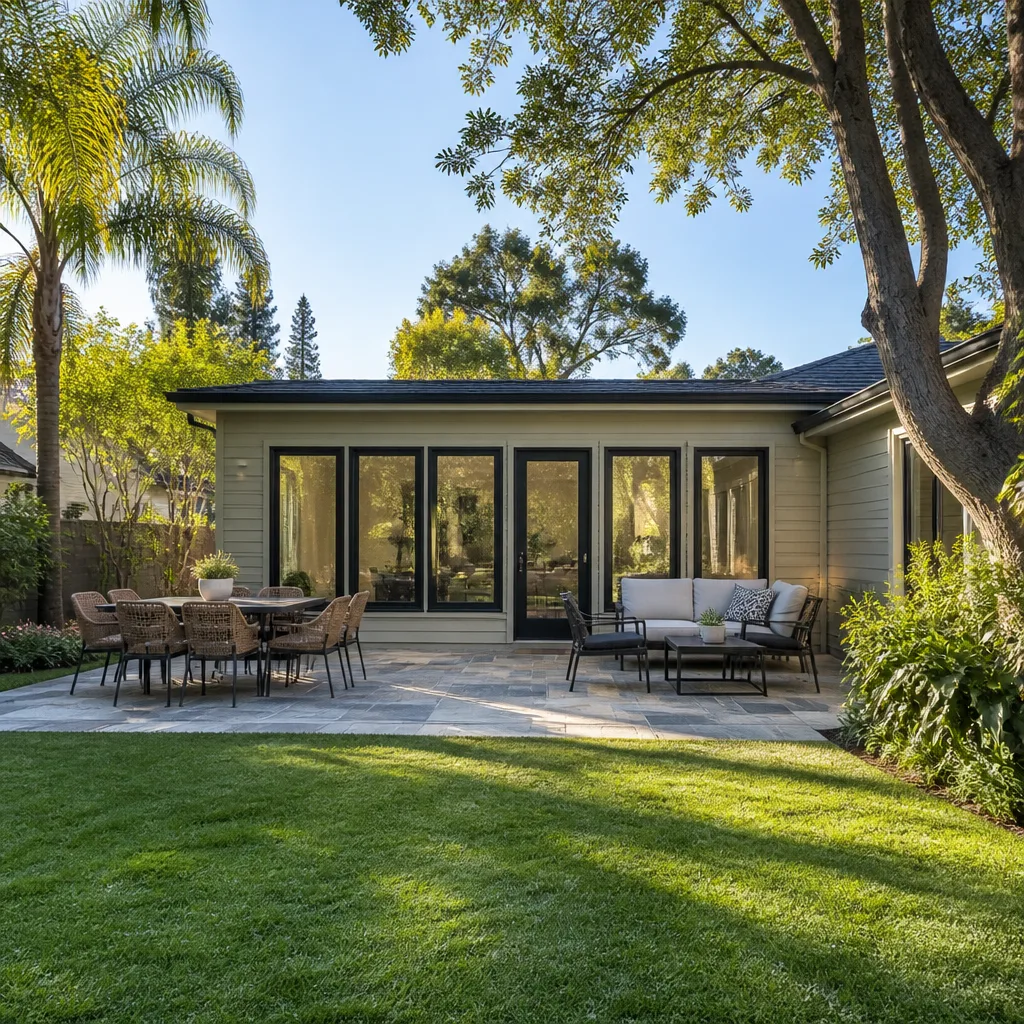
If you’re planning a home addition or ADU in West Covina and you’ve got Unilock pavers, retaining walls, or hardscape features integrated into your property, you’re likely wondering how the new structure ties into your existing Unilock work. Mason Remodeling Co West Covina handles Unilock-compatible additions and ADU builds, with most home additions in West Covina running $45,000 to $130,000 and ADU construction falling between $90,000 and $220,000. Here’s what most homeowners discover when they start matching new construction to existing Unilock hardscape: the pavers and walls don’t fail first. The joints, base course, and drainage details do, and they pull adjacent work down with them if you don’t address it during the build.
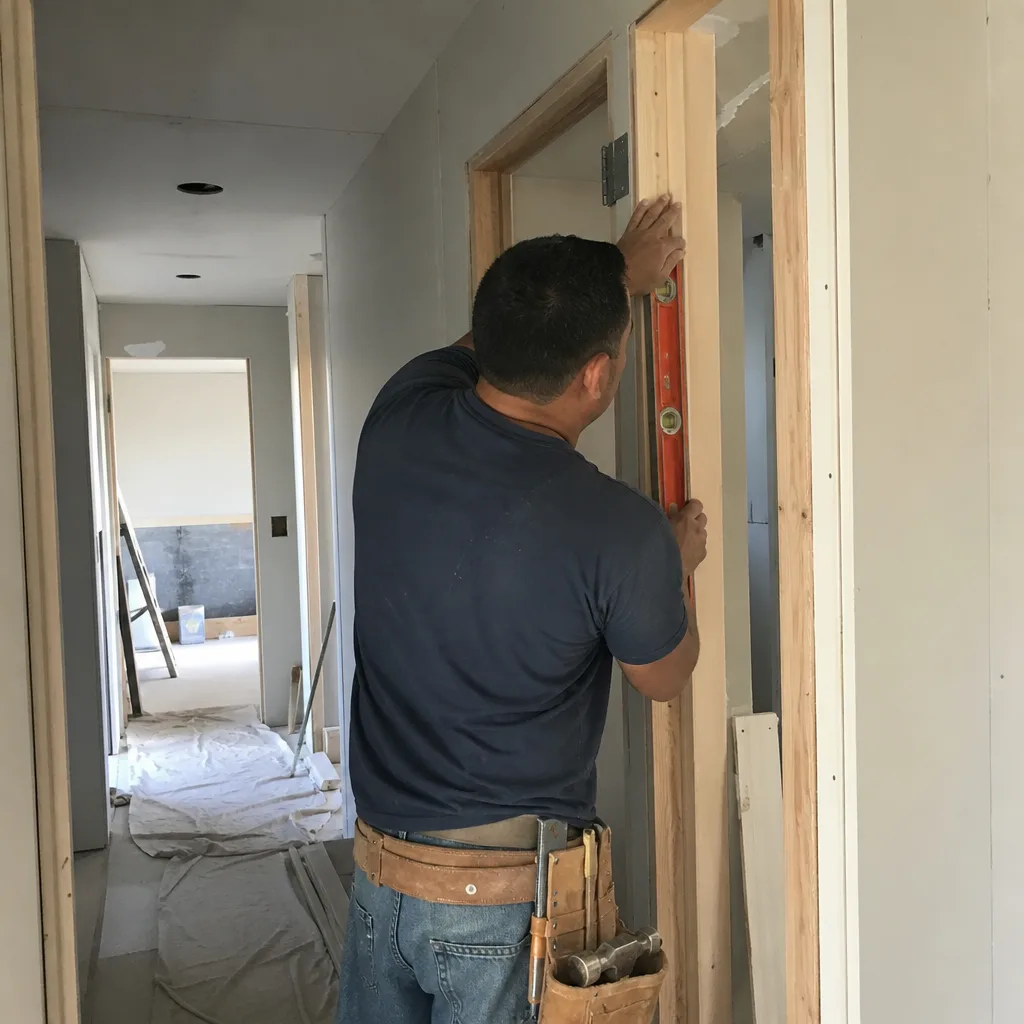
You should know what you’re getting before we ever pick up a tool. That starts with understanding how your Unilock hardscape interacts with a new foundation, a new roofline, and the changed drainage patterns any addition or ADU brings to a West Covina lot.
Key Takeaways
- Home additions in West Covina typically cost $45,000 – $130,000; ADUs run $90,000 – $220,000.
- Existing Unilock pavers and walls need a base course and drainage assessment before new footings go in adjacent to them.
- We coordinate the hardscape side with the framing side so you don’t end up with a beautiful addition and a sunken paver patio two years later.
- Written price before any work starts, on every project, every time.
- Call (707) 760-7579 for a free estimate. A live person answers, 24/7.
Which Unilock Models This Applies To
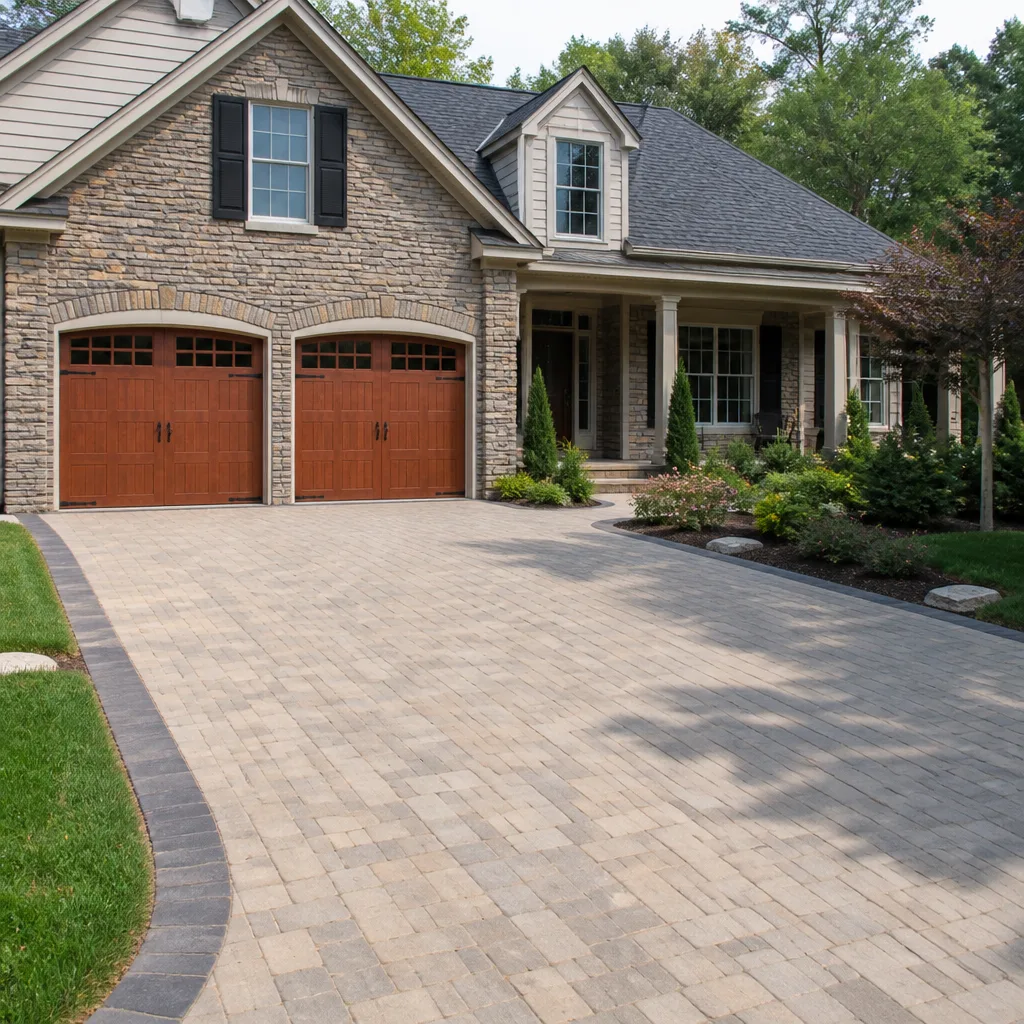
Unilock makes a wide range of pavers, wall blocks, and edging products, and the compatibility question comes down to what you already have on the ground. The most common Unilock lines we run into on West Covina properties are Brussels Block pavers (the tumbled-edge classic), Richcliff (a larger-format paver often used for patios and driveways), Lineo Dimensional Stone (clean, rectangular, modern), and U-Cara Multi-Face Wall (modular retaining and garden walls). Each of these has different joint widths, base depth requirements, and edge restraint needs, which matters when a new addition or ADU footprint changes how water flows across the yard.
Here’s the compatibility gotcha most people don’t catch until it’s too late: if your Unilock patio or walkway was installed before your addition is planned, it almost certainly wasn’t compacted to structural standards near where the new foundation will bear. Standard paver base preparation is 4 – 6 inches of compacted aggregate for pedestrian loads, but when you’re adding a structure that shifts grade, adds roof runoff, or requires trenching for utilities, that base needs to go deeper. We typically spec a minimum 8 – 10 inch compacted base under Unilock pavers within 10 feet of any new foundation line in West Covina, because our clay-heavy soil expands and contracts with seasonal moisture. That’s a spec range worth checking, not a guess.
On the OEM versus aftermarket question for Unilock specifically: Unilock manufactures their pavers and wall units, but the installation components (base aggregate, bedding sand, edge restraints, geotextile fabric, polymeric joint sand) are commodity items sourced from landscape supply houses. There’s no such thing as “Unilock-brand sand” that we’ve ever spec’d. What matters is matching the paver’s thickness and joint width to the right polymeric sand grade. Brussels Block, for instance, has wider, irregular joints that need a coarser polymeric sand. Richcliff, with its tighter joints, takes a finer grade. Getting that wrong on a new patio that meets a new addition is a classic way to see joint washout within one rain season.
As an independent contractor, Mason Remodeling Co West Covina is not affiliated with Unilock, but we’ve worked with their pavers and walls on enough West Covina projects near Eastland Center and beyond to know which combinations hold up under our sun and rain cycles.
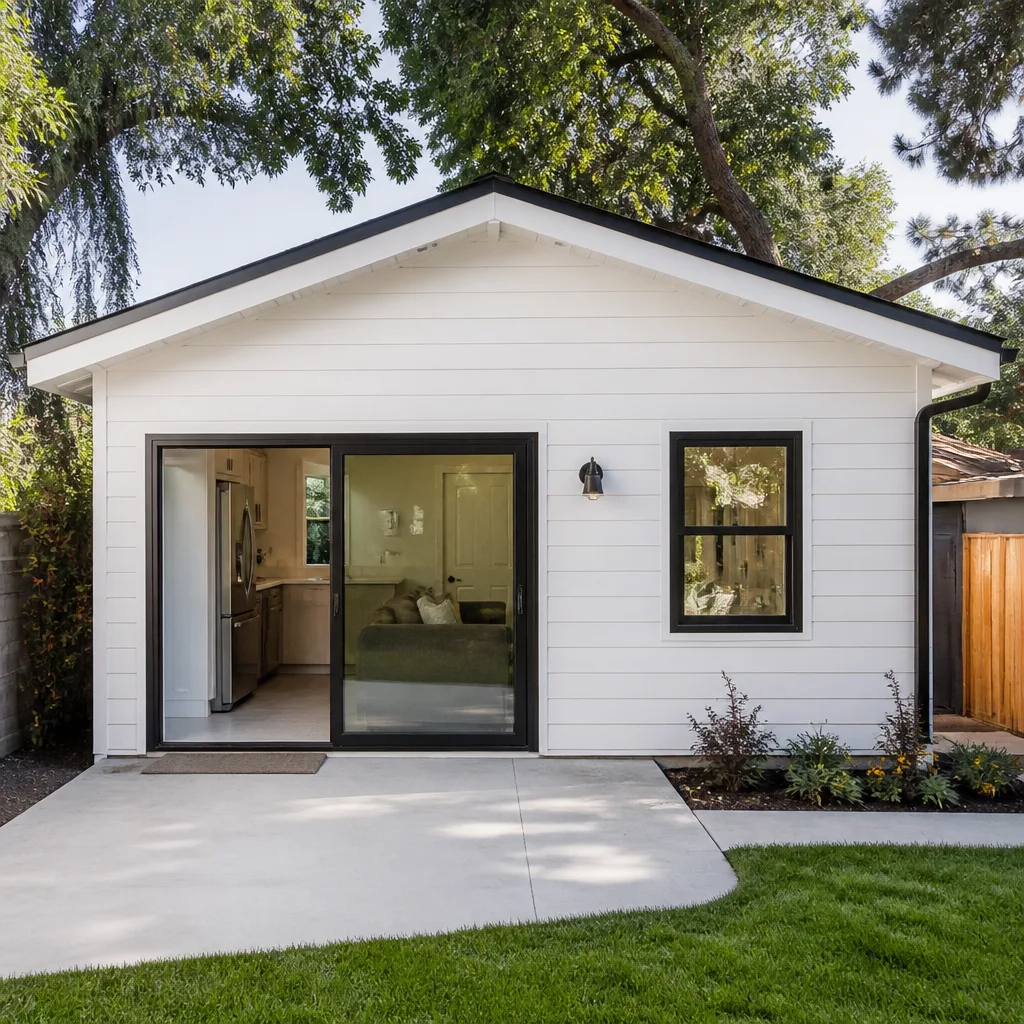
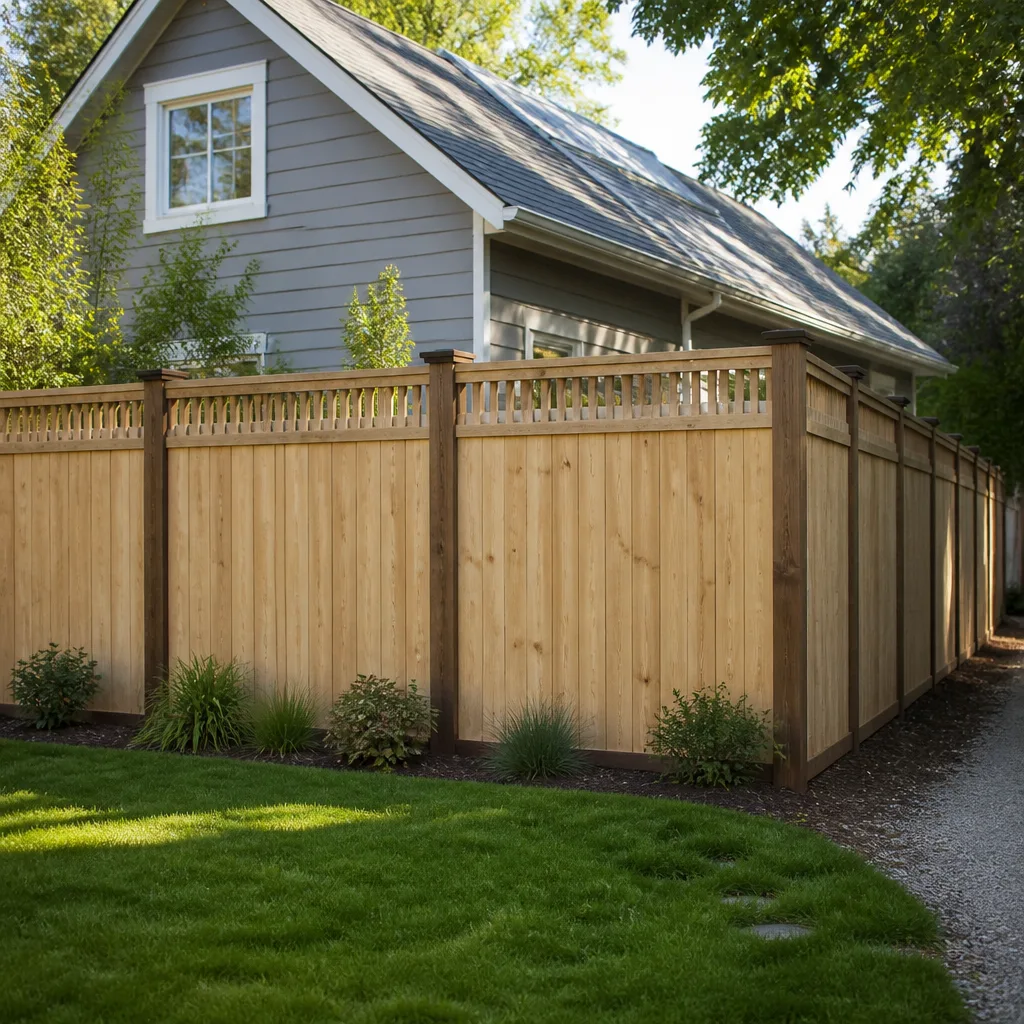
Styles & brands we work with
Signs Your Unilock Home Additions & ADU Is Failing
When we talk about “failure” on a project that combines construction and hardscape, it’s rarely one dramatic event. It’s a slow unraveling you can catch early if you know what to look for. Here are the signs we see most often on West Covina properties:
- Pavers sinking or heaving near the new foundation. This means the base course was either under-compacted during the original install or trenched through during utility work for the addition. Water gets in, soil shifts, and the pavement drops. If you see a visible dip within 5 feet of the new wall or slab, that’s your first red flag.
- Polymeric sand washing out of the joints. When the roof of your new addition or ADU discharges rainwater directly onto the paver field without a proper swale or catch basin, the force of the runoff erodes joint sand within months. You’ll see bare gaps, then moving pavers, then cracked edges.
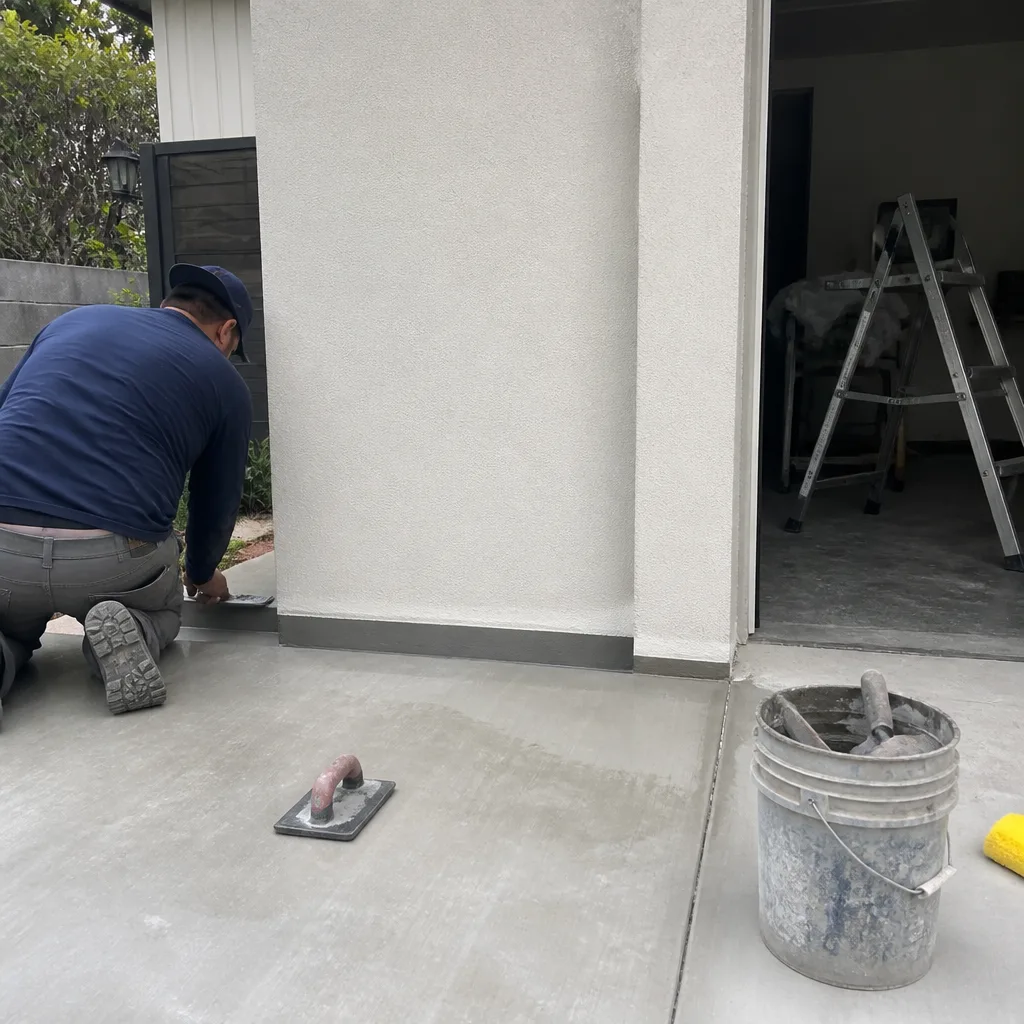
- Separation between pavers and the new foundation or stem wall. Clay soil in West Covina expands when wet and contracts when dry. The new foundation is rigid; the paver field wants to move. Without an expansion joint or a properly spec’d edge restraint, you’ll see a widening gap that invites water, weeds, and ants.
- Water pooling against Unilock walls or steps. If your addition changed the site grade, even slightly, you might now be directing runoff toward a U-Cara wall or a set of Unilock steps that used to drain fine. Prolonged saturation weakens the block’s base and leads to leaning or bulging.
- Stains or efflorescence creeping up wall blocks. New concrete from the addition can leach minerals that migrate through the soil and into porous Unilock block faces, leaving white, chalky deposits. Not structural, but it tells you moisture is moving where it didn’t before.
See the difference
 Before
 After
After Before
 After
After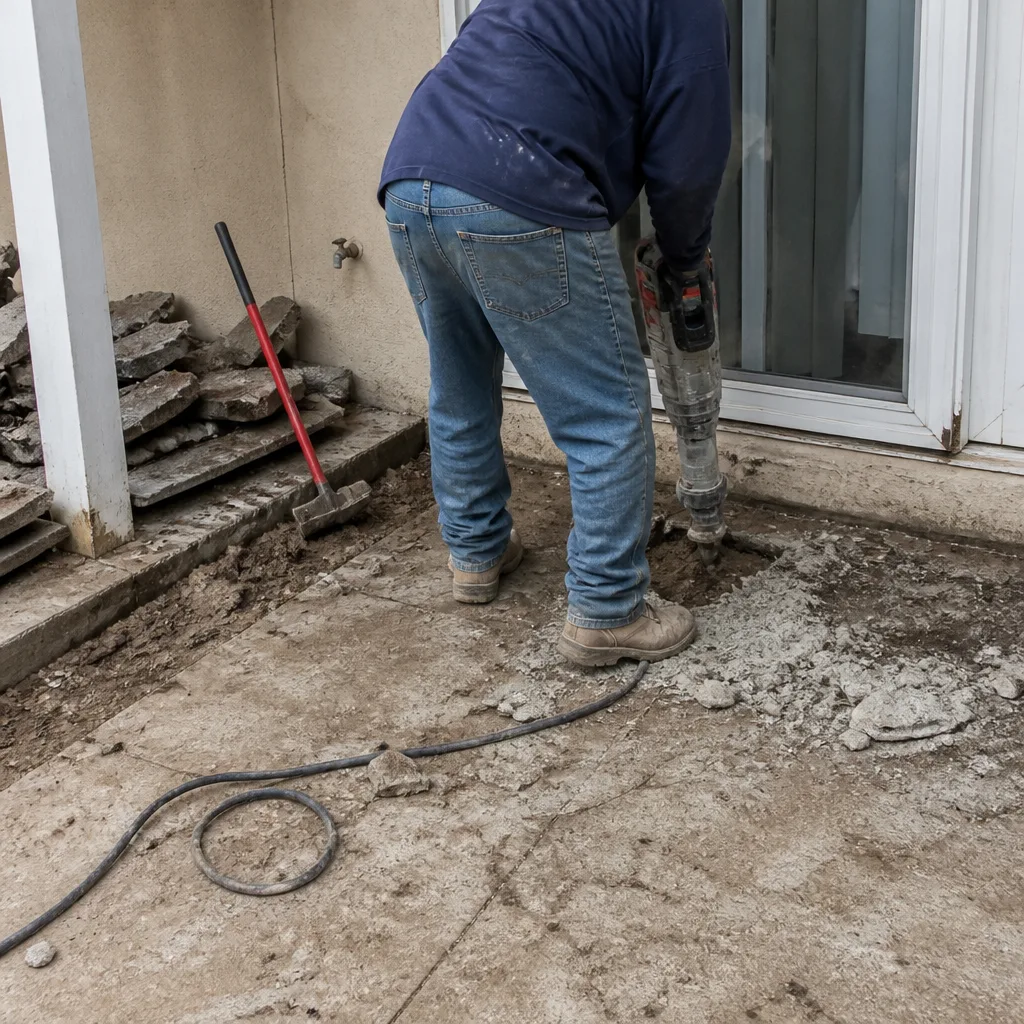 Before
 After
AfterReplacement Cost & What’s Included
For a full home addition in West Covina, you’re looking at $45,000 to $130,000 depending on square footage, foundation work, roofline complexity, and how much hardscape reconstruction your existing Unilock work requires. An ADU runs higher because it’s a complete dwelling unit with its own kitchen, bath, and utility connections: $90,000 to $220,000 is the realistic range here. A garage conversion sits between those at $30,000 to $80,000. These are installed prices: labor, materials, site prep, and hardscape integration all in.
What drives the range on the Unilock side specifically: how much of your existing paver field we have to lift, re-base, and re-lay to accommodate the new structure, whether we need to add drainage infrastructure (channel drains, catch basins, or a re-graded swale), and what new Unilock material, if any, we’re matching. Matching decades-old pavers to brand-new product is never a perfect color match because UV exposure and traffic age the surface. We’ll tell you that up front, in writing, before you sign anything.
Our written price includes the full scope: demolition, excavation, foundation, framing, roofing, mechanicals, finishes, and hardscape work. No verbal estimate that grows. No change order surprises. And every completed project carries the 365-Day Done Right Promise: if the work isn’t right within a year of completion, we make it right at no cost to you.
DIY or Call Us?
Here’s the honest split. You can absolutely walk your property after a rain and check for ponding water, shifting pavers, or washed-out joints. You can photograph what you see and even sketch where water is flowing off the new roofline. You should not attempt to re-base a paver field, and you should not trench anywhere near a foundation or retaining wall on your own. Utility lines in West Covina – gas, electric, water – run exactly where a homeowner’s common sense says they might not. Hitting a gas line during a “simple” drainage fix is a bad Wednesday. We pull permits, we call DigAlert, and we’ve done this enough times on West Covina lots to know where the surprises hide.
If your Unilock pavers are sinking or your joint sand is gone within a year of your addition being built, that’s a workmanship and drainage issue, not a “wait and see” issue. Call us at (707) 760-7579. We’ll tell you what we’d do, what it costs, and whether it’s urgent. The estimate is free, and a live person answers the phone.
FAQs
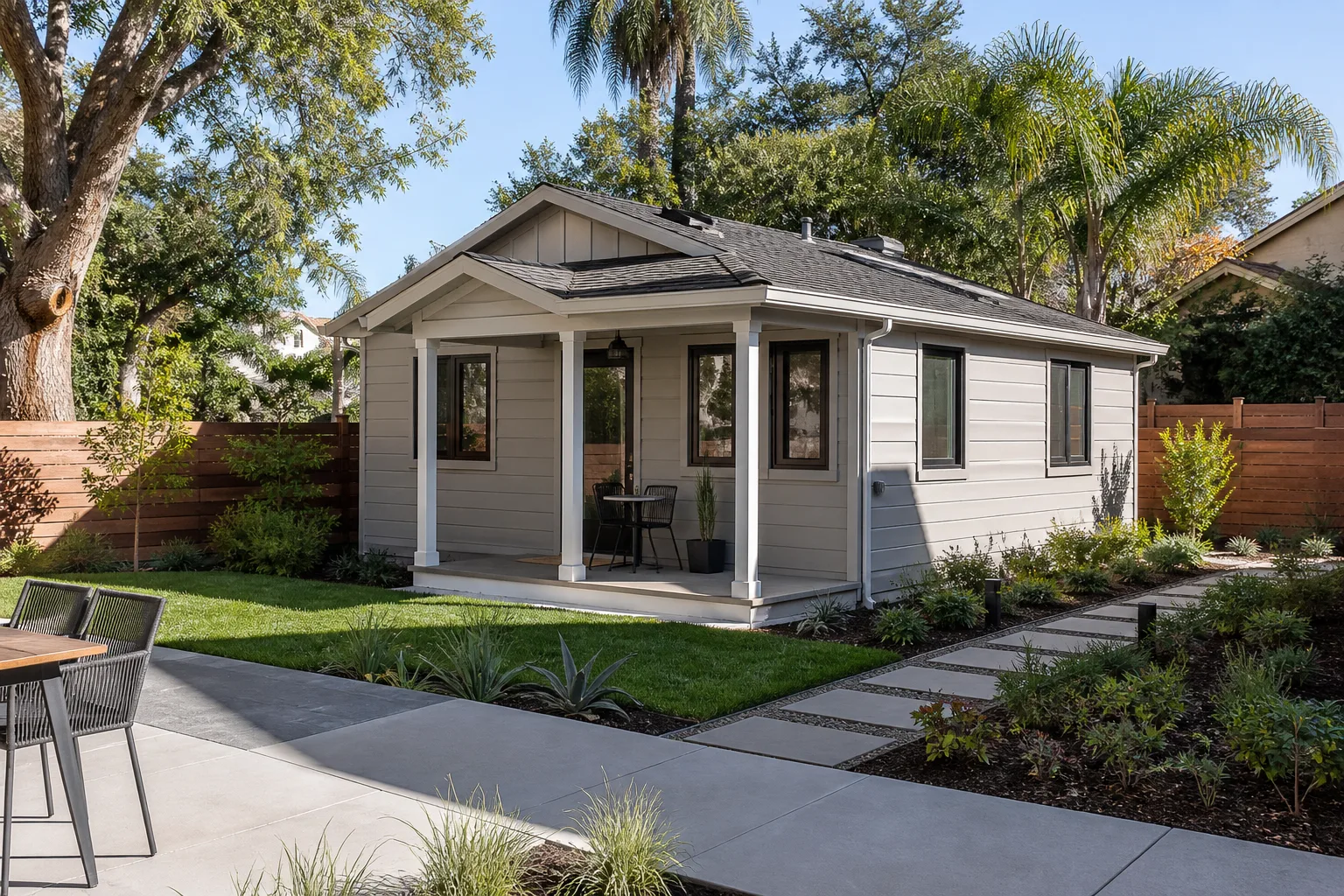
Unilock pavers themselves can last 30 – 50 years in West Covina’s climate if the base underneath them was properly compacted and the drainage around your new addition was handled correctly. The failure point is almost never the paver; it’s the base course and water management around it. A properly graded addition site with adequate drainage keeps pavers intact for decades; a sloped roof discharging onto the paver field can compromise the joints within two seasons.
Yes, if the damage is localized – a sunken section near the foundation, a washed-out joint area, a leaning retaining wall – we can lift, re-base, and re-lay that section without touching the rest of the field. Full replacement is only warranted when the base failure is widespread or the grade around the addition needs to be corrected across the whole yard. We’ll give you a straight answer on which one your situation calls for. Call (707) 760-7579 for a free assessment.
A typical home addition runs 4 to 8 months from permit to final walkthrough, depending on scope, city review times, and whether your Unilock hardscape needs significant rework. An ADU usually runs 6 to 12 months because it’s a full dwelling unit requiring separate utility connections and often its own inspection cycle. We map the schedule out in writing before we start, and if something is going to take longer, Isaac Pruett tells you before the work slips, not after.
We don’t warehouse large quantities of Unilock inventory, but we source directly through Unilock’s Southern California distribution network and can typically have product on site within 1 to 2 weeks of placing the order. For matching work, we’ll coordinate the color series and product code with you before ordering. We also work with KraftMaid, Cambria, and Silestone for interior finishes when the project includes kitchen or bath work.
Our written price is what you pay. No change orders unless you ask for a change in scope, and if you do, you’ll approve the new line item in writing before we proceed. No surprises on the final invoice, ever. That’s the Mason Remodeling Co West Covina standard on every project.
Written by Isaac Pruett, Owner, Mason Remodeling Co West Covina at Mason Remodeling Co West Covina, serving West Covina and nearby areas.